
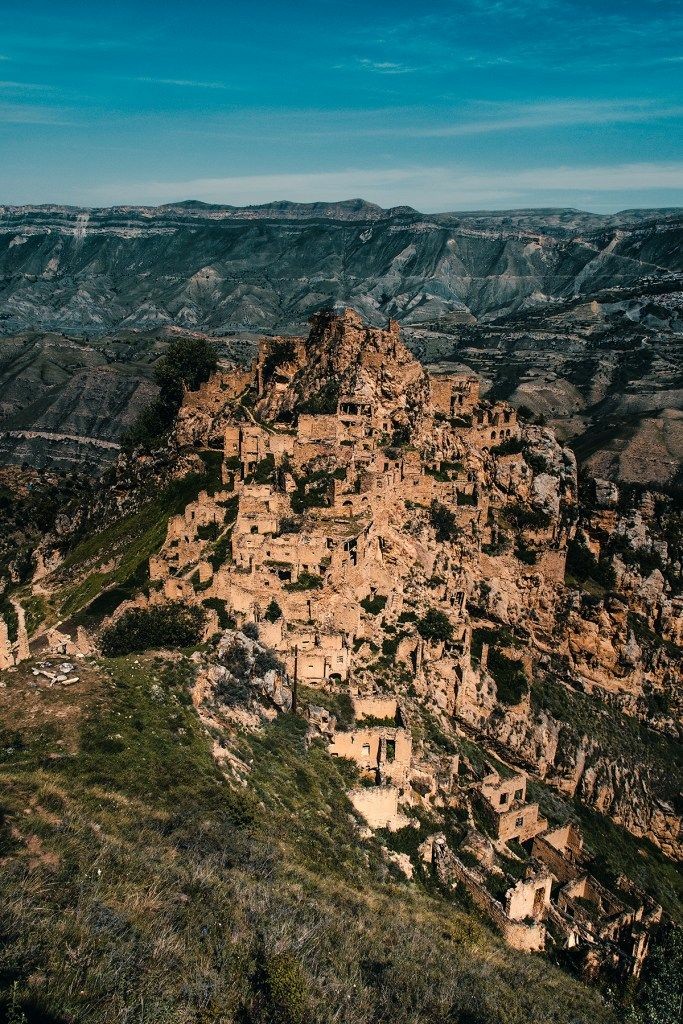
An autonomous republic in south-western Russia, on the western shore of the Caspian Sea; population 2,707,900 (est. 2009); capital, Makhachkala.
The Terek River is the most important river in Dagestan, flowing from Chechnya and toward the Caspian Sea. There is a small coastal plain that gives rise quickly to the eastern portion of the main Caucasus range. The most intense ethno-linguistic diversity is found in the mountains as a result of the isolation that historically separated groups of people. The northern part of Dagestan connects with the Eurasian steppe.
Many of the people of Dagestan are descendents of the residents of the ancient Caucasian Albanian Kingdom. This kingdom was known for its multiplicity of languages and was Christian for many centuries, having close relations with the Armenian people and their Christian culture.
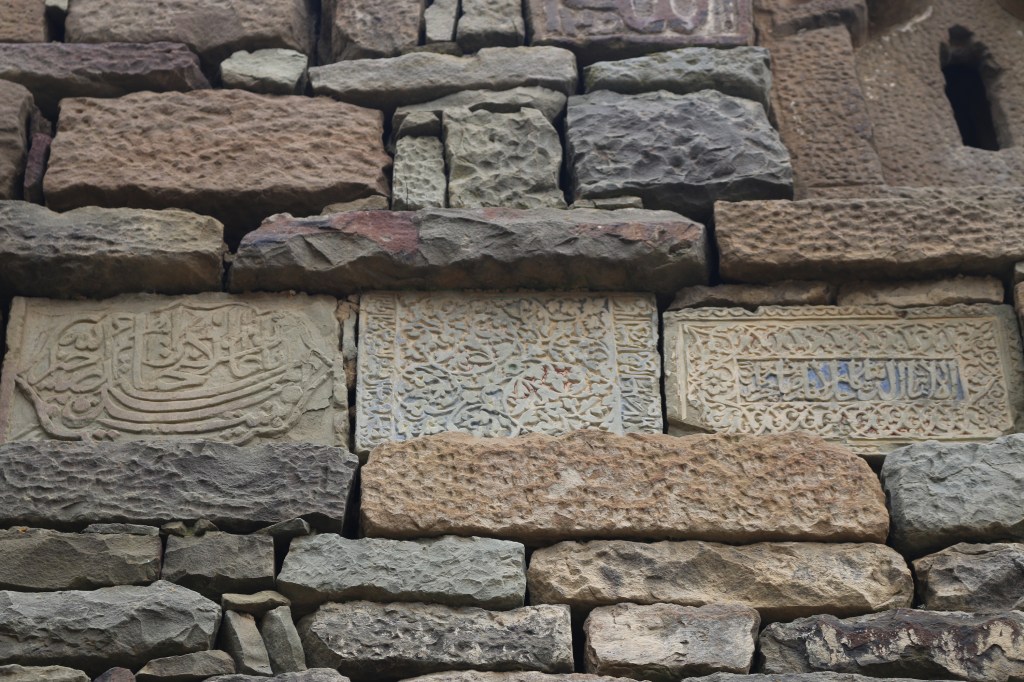
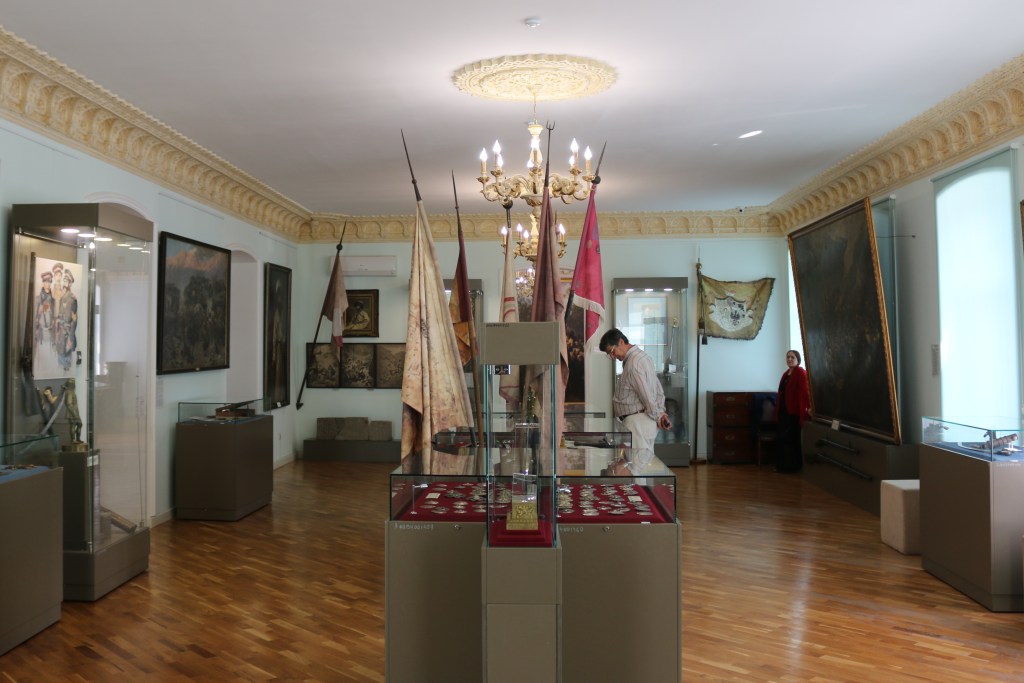
The word Dagestan is of Turkish and Persian origin, directly translating to “Land of the Mountains.” The Turkish word dağ means “mountain”, and the Persian suffix -stan means “land”. Some areas of Dagestan were known as Lekia, Avaria and Tarki at various times. The name Dagestan historically refers to the eastern Caucasus, taken by the Russian Empire in 1860 and renamed the Dagestan Oblast. The current, more autonomous Republic of Dagestan covers a much larger territory, established in 1921 as the Dagestan Autonomous Soviet Socialist Republic, by inclusion of the eastern part of Terek Oblast.
In the 6th century the Sassanid Empire after more than 100 years of war conquered the Eastern Caucasus, resulting in the entire region of Dagestan falling under the influence of Persia.
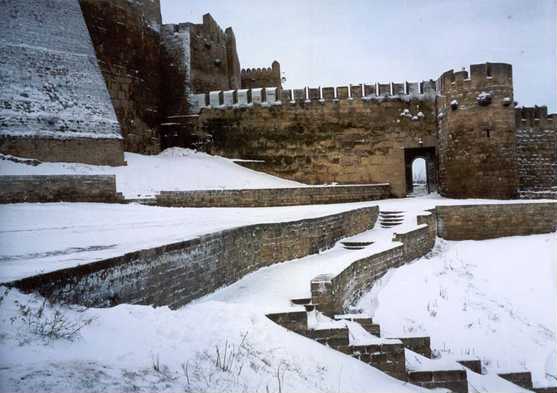
In 552, “Khazars” invaded North-Eastern Caucasus and occupied northern lowlands of Dagestan. Reigning Shah of Persia Khosrau I (531—579), to protect his possessions from the new wave of nomads, began the construction of defensive fortifications in Derbent, that closed a narrow passage between the Caspian Sea and Caucasian mountains. Khosrau I owned fortress Gumik. The modern name “Derbent” is a Persian word (دربند Darband) meaning “gateway”, which came into use in this same era, in the end of the 5th or the beginning of the 6th century CE, when the city was re-established by Kavadh I of the Sassanid dynasty of Persia.
Ancient Iranian language elements were absorbed into the everyday speech of the population of Dagestan and the city of Derbent, especially during the Sassanian era, and many remain extant. A policy of “Persianizing” Derbent and the eastern Caucasus in general can be traced over many centuries, from Khosrow I to the Safavid shahs Ismail I, and Abbās the Great. According to the account in the later “Darband-nāma,” after construction of the fortifications Khosrow I “moved much folk here from Persia,” relocating about 3,000 families from the interior of Persia to Derbent and neighboring villages. This account seems to be corroborated by the Spanish Arab Ḥamīd Moḥammad Ḡarnāṭī, who reported in 1130 that Derbent was populated by many ethnic groups, including a large Persian-speaking population.
Dagestanis were traditionally Muslims peoples.
Attempts in the post-Soviet period to incite Islambased rebellion, however, have been generally unsuccessful. These rebellions have come from the direction of the troubled Republic of Chechnya,
which is located west of Dagestan. The Islam of Dagestan was traditionally a Sufi-based Islam, one that is inimical to the sort of puritanical Sunni sectarianism that is exported from other parts of the Islamic world. Sufism in this part of the world is not without its militant expression; one of the most famous leaders, Shamil, was an Avar of Dagestan.
His power base was mainly in the Central Caucasus among the Chechens.
Unlike many of their other neighbors in the Caucasus, the Dagestanis, for the most part, did not experience the exile and deportation in the nineteenth and twentieth centuries. This makes the narrative of their people much less filled with the anger and alienation that characterizes Chechen, Abkhazian,
and other histories. The ethnic fragmentation of
Dagestan has also prevented a unified Dagestani national identity from being formed.
The Russian Empire appeared in this area in two different forms: by the Cossacks who lived at the periphery of the empire in the semiautonomous communities; and by means of the imperial army’s movement down the Volga River and to the western shore of the Caspian. Peter the Great captured territory in this area, but Dagestan was not fully brought into the Russian Empire until the midnineteenth century.
The Soviet period saw the creation of Cyrillicbased alphabets for the various languages of Dagestan. This strengthened the existence of the larger languages, and may have forestalled the extinction of some of the smallest of the languages. It also served to forestall the creation of a united Dagestani national identity.
In the post-Soviet period, in addition to Islamic agitation from the west, there has also been a certain amount of ethnic conflict. The conflict is generally over who will control the politics and patronage of certain enclaves, while the larger groups jockey for position in the republic’s government.
Some of the conflicts result from the ethnic mixing that was encouraged and sometimes forced during the Soviet period.
Reference
Derbent Timeline https://derbentonline.com/derbent-timeline/
Timothy C. Dowling Russia at War: From the Mongol Conquest to Afghanistan, Chechnya, and Beyond pp 728 ABC-CLIO, 2 dec. 2014 ISBN 1598849484
Aksan, Virginia. (2014). Ottoman Wars, 1700-1870: An Empire Besieged page 463. Routledge. ISBN 978-1317884033
BIBLIOGRAPHY
Hill, Fiona. (1995). “Russia’s Tinderbox: Conflict in the North Caucasus and Its Implication for the Future of the Russian Federation.” Cambridge, MA: Harvard University, Strengthening Democratic Institutions Project
 Mother Rus