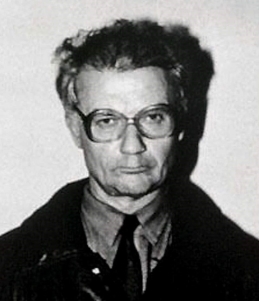
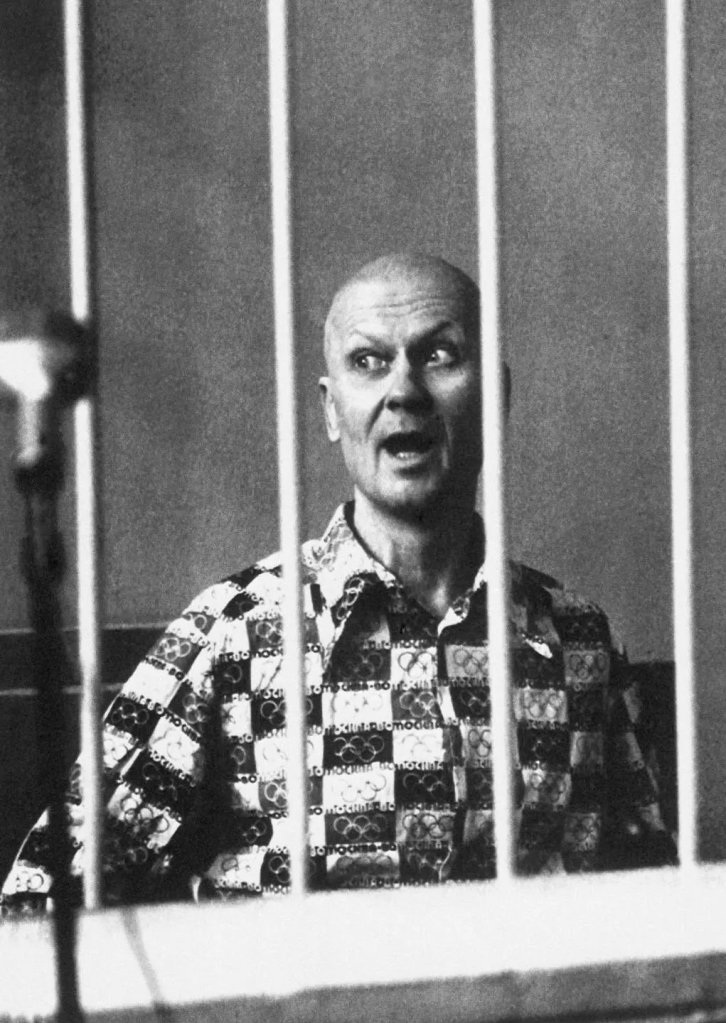
A native of the Ukraine, born October 16, 1936, Andrei Chikatiko was a late-blooming serial killer who traced his crimes back to early childhood. His family had suffered greatly during Joseph Stalin’s forced collectivization in the 1930s, Chikatilo said. Apart from knowing poverty and hunger, he had lost an older brother, allegedly murdered and cannibalized by neighbors during the famine that claimed millions of Russian lives. Whether the tale was true or not, young Andrei’s mother drilled it into him with frequent repetition, and his later deeds would replicate the act. While most serial murderers kill for the first time in their teens or early twenties, Chikatilo was a slow starter. With a university degree, a wife and two children, he presented the appearance of a meek family man, but dark urges were brewing behind that pacific facade. Employed as a school dormitory supervisor, Chikatilo was fired over allegations that he had molested male students. A new job, as a factory supply clerk in Rostov-on-Don, required frequent travel by bus or train, and Chikatilo turned the circumstance to his advantage, trolling for victims in bus depots and railway stations. The self-described “mad beast” and “mistake of nature” committed his first murder on December 22, 1978, in the town of Shakhty. The body of his victim, a nine-year-old girl whom Chikatilo strangled, raped, and stabbed repeatedly, was pulled from the Grushevka River days later. Chikatilo was one of many suspects questioned in the case, but police soon focused on 25-yearold Alexander Kravchenko, an ex-convict who had served time for murder and rape. In custody, Kravchenko was beaten by police until he confessed, whereupon he was sentenced to death and shot by a firing squad. The “solution” looked good on paper, but it naturally failed to deter the real killer from striking again. The terror began in earnest nearly three years later, in September 1981. Over the next nine years, dozens of corpses would be found in wooded areas adjacent to train or bus depots, grossly mutilated by a phantom who was quickly dubbed the “Rostov Ripper.” The victims included young women and children of both sexes, raped and stabbed repeatedly in a pattern of grisly overkill. Some victims had their tongues bitten off; others were disemboweled, sometimes with organs missing that suggested the killer might be indulging in CANNIBALISM. (Chikatilo later confessed to occasionally nibbling on internal organs but denied consuming human flesh.) Repeated stab wounds to the face were a specific trademark of the killer, but the mutilations he inflicted otherwise appeared to follow no set pattern. Chikatilo may have come late to the murder game, but he was making up for lost time. At the peak of his homicidal frenzy, in 1984, eight victims were found in the month of August alone. Chikatilo was held for questioning again that year and released for lack of evidence after Communist officials intervened on his behalf, lamenting the “persecution” of a loyal party member. It would take another six years, with some 25,000 suspects interrogated, before police came back to Chikatilo a third time and finally bagged their killer. Part of the problem was communist mythology, maintaining that such “decadent Western crimes” as serial murder never occurred in a “people’s republic.” State censorship forbade police from broadcasting descriptions of their suspect–or even admitting his crimes had occurred–and homicide investigators were thus reduced to the same cloak-and-dagger routine that had retarded investigation of earlier, similar cases. Propaganda aside, however, there seemed to be mayhem aplenty in Rostov-on-Don: before it ended, the Ripper investigation would disclose 95 additional murders and 245 rapes committed by other human predators in the district. Chikatilo finally ran out of luck in November 1990, when he was spotted in a Rostov railway station, sporting bloodstains on his face and hand. While he was not arrested at the time, his name was taken down, and the discovery of another victim near the depot two weeks later prompted his arrest on November 20. After eight days of interrogation, Chikatilo confessed a total of 55 murders, leading police to several corpses they had not discovered yet. His recitation of atrocities–illustrated by demonstration on mannequins–included sadistic mutilation of several victims while they were still alive. Charged with 53 counts of murder, Chikatilo went on trial in June 1992; four months later, on October 15, he was convicted on all but one count and sentenced to death. A last-minute appeal for clemency was rejected by President Boris Yeltsin in February 15, 1994, and Chikatilo was executed that same day, with a pistol shot to the back of his head. Alexander Kravchenko, meanwhile, was posthumously pardoned for the slaying of Chikatilo’s original victim.
At the beginning of World War II. Bagramyan served as a Soviet staff officer on the Southwest Front, as Chief of Operations Department in the Kiev Military District and also as Chief of Staff to TIMOSHENKO after BUDENNY’s dismissal. He was given command of an army, the 16th Guards (later the 11th Guards), in July 1942. His army fought on the Western Front and at Kursk (July 1943) where it attacked from the north and achieved the envelopment of Orel. In November 1943 he was promoted to General and replaced YEREMENKO as Commander of First Baltic Front, which became known as the Samland Group in later operations. During the Belorussian campaign his armies unexpectedly broke through in the north and encircled Vitebsk killing 20,000 Germans and capturing 10,000. The Front Armies then crossed the Dvina, took Daugavpils and reached the coast west of Riga. Now all that was left was to complete the encirclement of German Army Group North. In January 1945 his Group occupied Memel and was then ordered to take Königsberg. This proved a stumbling block and Bagramyan was held responsible for the failure to take it until April 1945. After the war he was appointed Commander of the Baltic Military District.
An autonomous republic in south-western Russia, on the western shore of the Caspian Sea; population 2,707,900 (est. 2009); capital, Makhachkala.
The Terek River is the most important river in Dagestan, flowing from Chechnya and toward the Caspian Sea. There is a small coastal plain that gives rise quickly to the eastern portion of the main Caucasus range. The most intense ethno-linguistic diversity is found in the mountains as a result of the isolation that historically separated groups of people. The northern part of Dagestan connects with the Eurasian steppe. Many of the people of Dagestan are descendents of the residents of the ancient Caucasian Albanian Kingdom. This kingdom was known for its multiplicity of languages and was Christian for many centuries, having close relations with the Armenian people and their Christian culture.
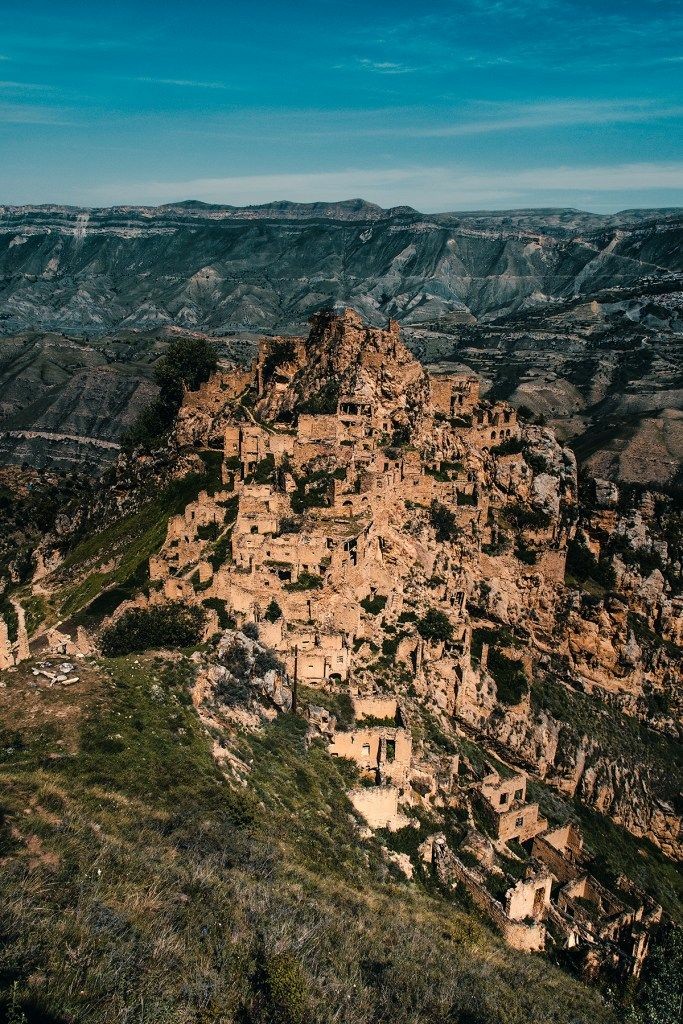
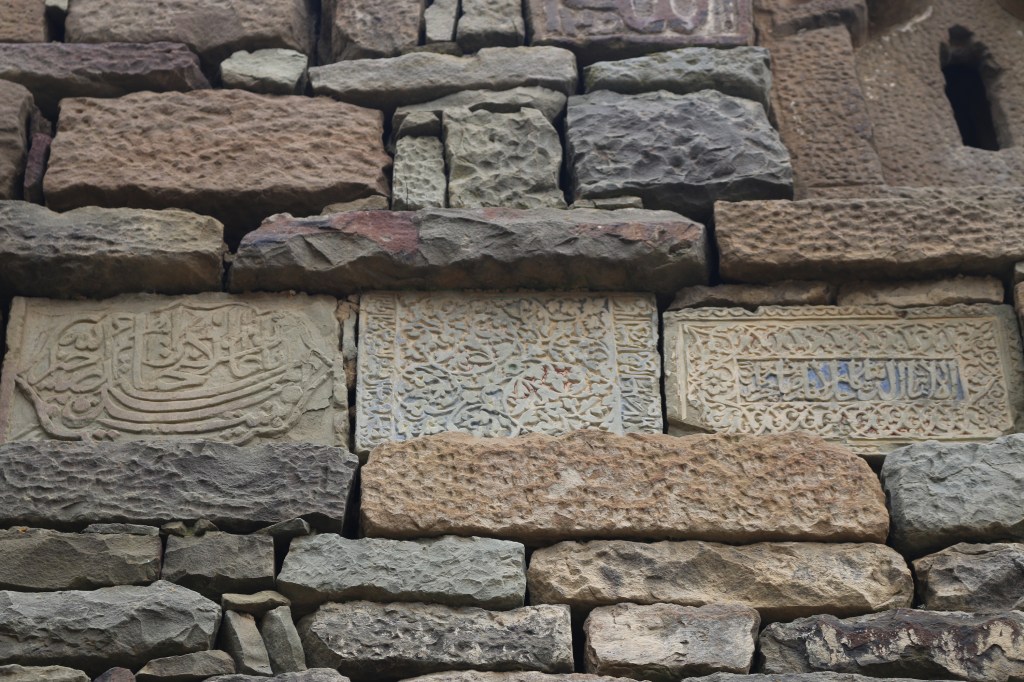
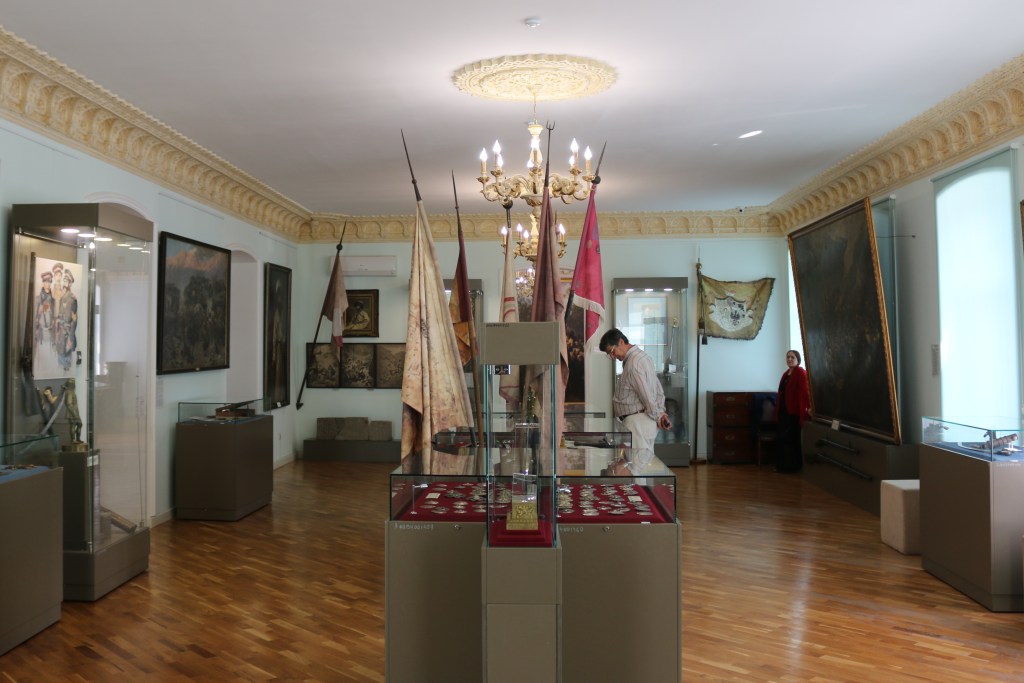
Kubachi / Zargaran village in Dagestan, 2020 – Photo: Persian Dutch NetworkNational Museum of the Republic of Dagestan – A. Takho-Godi, Makhachkala, Russia 2019 | Photo: Persian Dutch Network
The word Dagestan is of Turkish and Persian origin, directly translating to “Land of the Mountains.” The Turkish word dağ means “mountain”, and the Persian suffix -stan means “land”. Some areas of Dagestan were known as Lekia, Avaria and Tarki at various times. The name Dagestan historically refers to the eastern Caucasus, taken by the Russian Empire in 1860 and renamed the Dagestan Oblast. The current, more autonomous Republic of Dagestan covers a much larger territory, established in 1921 as the Dagestan Autonomous Soviet Socialist Republic, by inclusion of the eastern part of Terek Oblast.
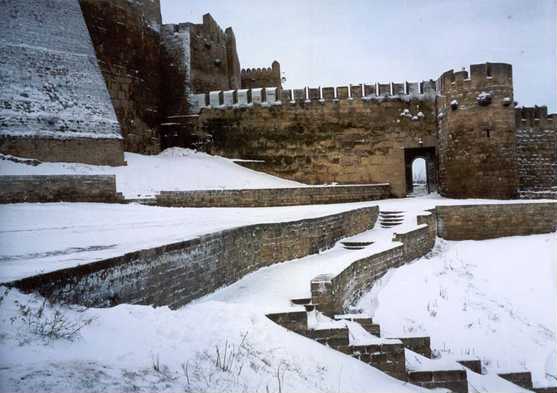
Sassanid fortress in Derbent, present day Dagestan, Russia Photo: Unknown
In the 6th century the Sassanid Empire after more than 100 years of war conquered the Eastern Caucasus, resulting in the entire region of Dagestan falling under the influence of Persia.
In 552, “Khazars” invaded North-Eastern Caucasus and occupied northern lowlands of Dagestan. Reigning Shah of Persia Khosrau I (531—579), to protect his possessions from the new wave of nomads, began the construction of defensive fortifications in Derbent, that closed a narrow passage between the Caspian Sea and Caucasian mountains.Khosrau I owned fortress Gumik. The modern name “Derbent” is a Persian word (دربند Darband) meaning “gateway”, which came into use in this same era, in the end of the 5th or the beginning of the 6th century CE, when the city was re-established by Kavadh I of the Sassanid dynasty of Persia.
Ancient Iranian language elements were absorbed into the everyday speech of the population of Dagestan and the city of Derbent, especially during the Sassanian era, and many remain extant. A policy of “Persianizing” Derbent and the eastern Caucasus in general can be traced over many centuries, from Khosrow I to the Safavid shahs Ismail I, and Abbās the Great. According to the account in the later “Darband-nāma,” after construction of the fortifications Khosrow I “moved much folk here from Persia,” relocating about 3,000 families from the interior of Persia to Derbent and neighboring villages. This account seems to be corroborated by the Spanish Arab Ḥamīd Moḥammad Ḡarnāṭī, who reported in 1130 that Derbent was populated by many ethnic groups, including a large Persian-speaking population.
Dagestanis were traditionally Muslims peoples. Attempts in the post-Soviet period to incite Islambased rebellion, however, have been generally unsuccessful. These rebellions have come from the direction of the troubled Republic of Chechnya, which is located west of Dagestan. The Islam of Dagestan was traditionally a Sufi-based Islam, one that is inimical to the sort of puritanical Sunni sectarianism that is exported from other parts of the Islamic world. Sufism in this part of the world is not without its militant expression; one of the most famous leaders, Shamil, was an Avar of Dagestan. His power base was mainly in the Central Caucasus among the Chechens. Unlike many of their other neighbors in the Caucasus, the Dagestanis, for the most part, did not experience the exile and deportation in the nineteenth and twentieth centuries. This makes the narrative of their people much less filled with the anger and alienation that characterizes Chechen, Abkhazian, and other histories. The ethnic fragmentation of
Dagestan has also prevented a unified Dagestani national identity from being formed. The Russian Empire appeared in this area in two different forms: by the Cossacks who lived at the periphery of the empire in the semiautonomous communities; and by means of the imperial army’s movement down the Volga River and to the western shore of the Caspian. Peter the Great captured territory in this area, but Dagestan was not fully brought into the Russian Empire until the midnineteenth century. The Soviet period saw the creation of Cyrillicbased alphabets for the various languages of Dagestan. This strengthened the existence of the larger languages, and may have forestalled the extinction of some of the smallest of the languages. It also served to forestall the creation of a united Dagestani national identity. In the post-Soviet period, in addition to Islamic agitation from the west, there has also been a certain amount of ethnic conflict. The conflict is generally over who will control the politics and patronage of certain enclaves, while the larger groups jockey for position in the republic’s government. Some of the conflicts result from the ethnic mixing that was encouraged and sometimes forced during the Soviet period.
Hill, Fiona. (1995). “Russia’s Tinderbox: Conflict in the North Caucasus and Its Implication for the Future of the Russian Federation.” Cambridge, MA: Harvard University, Strengthening Democratic Institutions Project
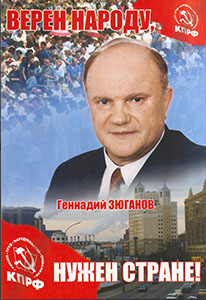
Political party. Known in Russian as the Kommunisticheskaia partiia Rossiskoi federatsii, the KPRF is the political successor to the banned Communist Party of the Soviet Union, also known as the Bolshevik Party. Out of the ashes of the banned Communist Party of the Russian Soviet Federative Socialist Republic, Gennady Zyuganov established the party in 1993, with the help of Sovietera politicians Yegor Ligachev and Anatoly Lukyanov. Under the influence of Zyuganov, the party married Marxism-Leninism with nationalism, sometimes called popular patriotism. Anti-Semitism, neo-Slavophilism, and Stalin worship are also evident in the party platform, which shares certain attributes with other “great power” (Derzhava) political parties. The ideologue Aleksandr Dugin exercised influence over the party during its early days, thus injecting a strain of neo-Eurasianism into the KPRF’s approach to domestic politics and foreign relations. The Communist Party, like other ultranationalist parties, pays lip service to the restoration of Russia’s historical boundaries, including reincorporation of the near abroad and abrogation of the Belavezha Accords. The KPRF is stridently antiNorth Atlantic Treaty Organization (NATO) and is particularly suspicious of British and American foreign policy; anti-globalization is also part of the party platform. On the domestic front, the party supports free education and health care, an end to labor “parasitism,” collective rights and security, and the ultimate realization of Communism as the future of mankind.
In order to obtain these goals, the KPRF advocates ending the mafia’s alleged control over the state and economy, terminating Russia’s forced capitalization, and introducing state regulation of all major economic sectors. While the newly formed KPRF fared rather poorly against Russia’s other political parties, particularly the Liberal Democratic Party of Russia (LDPR), in the 1993 State Duma elections, Zyuganov turned the Communists into the country’s most popular party by 1995 when the KPRF outpaced its nearest rival by more than two-to-one, taking 157 of the Duma’s 450 seats. The Communists were especially popular in the so-called Red Belt, a band of regions in southern European Russia that favored continued subsidies of health care, support for local industry, and restrictions on foreign trade and investment. In the 1996 presidential election, Zyuganov emerged as the early front-runner as Boris Yeltsin scrambled to regain his earlier popularity. The KPRF established the Russian All-People’s Union as a leftist umbrella organization in order to increase Zyuganov’s influence at the national level. Only after a hard-fought campaign, in which forces allied with the Kremlin–including the oligarchs and regional governors–branded the Communists as warmongers and chekists (secret police), and a second round of elections did Yeltsin emerge victorious over Zyuganov. The KPRF continued its electoral success in the 1999 Duma poll, winning more than 24 percent of the vote, though the party obtained fewer seats than in 1995. With the ascent of Vladimir Putin, the Communists’ popularity suffered, particularly in the 2003 parliamentary elections. Putin’s use of Potemkin parties, a pliant media, and the terrorist threat allowed him to effectively sideline the KPRF. Recognizing the futility of running against the popular president, Zyuganov sat out the 2004 elections, throwing the KPRF’s support behind the Agrarian Party’s Nikolay Kharitonov. The party also suffered from several high-profile defections and attempts to split its constituency, though the KPRF has remained the largest opposition party in the country through the first decade of the new millennium. Zyuganov returned to presidential politics in 2008, running against Dmitry Medvyedev; he claimed a respectable 17.8 percent of the vote. Since the 20082009 global financial crisis, Zyuganov’s popularity and influence are on the rise, and Prime Minister Putin has taken an increasingly conciliatory position toward the KPRF. Party membership exceeds 500,000, with nearly 20,000 new members joining annually. However, unlike the LDPR, the Communists tend to be older on average. The party has a well-developed media arm, including newspapers and radio.
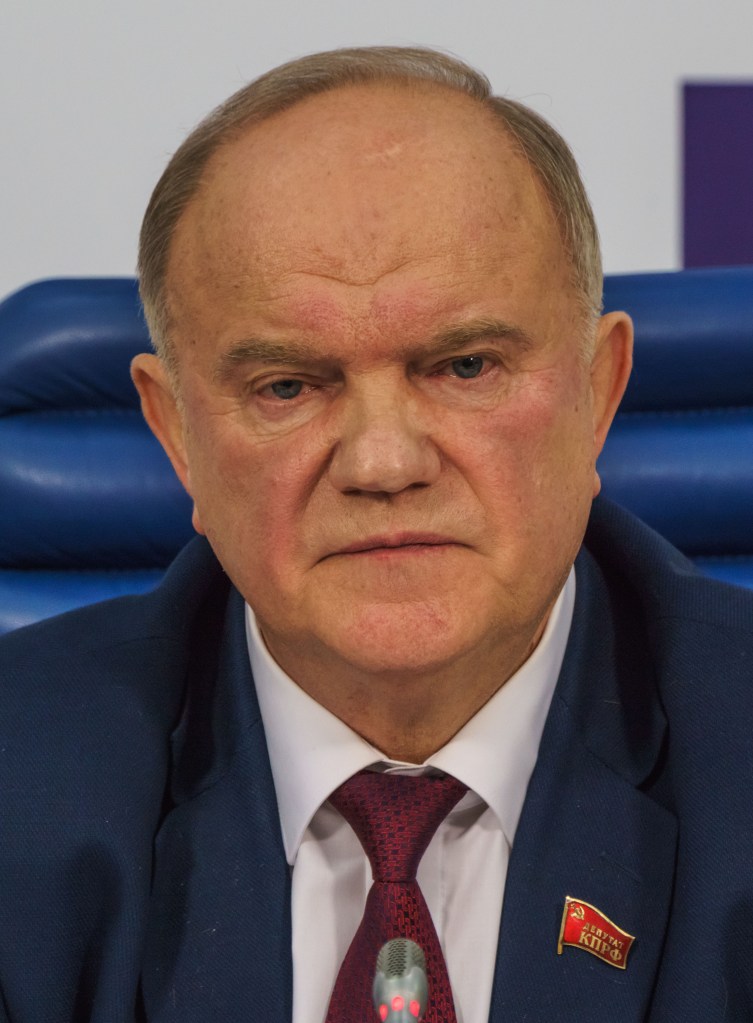
Gennady Zyuganov (b. 1944) is a Russian politician, head of KPRF. Photo taken at TASS press center, Moscow. Image credit A.Savin
📚 Historical Dictionary of the Russian federation Robert A. Saunders and Vlad Strukov
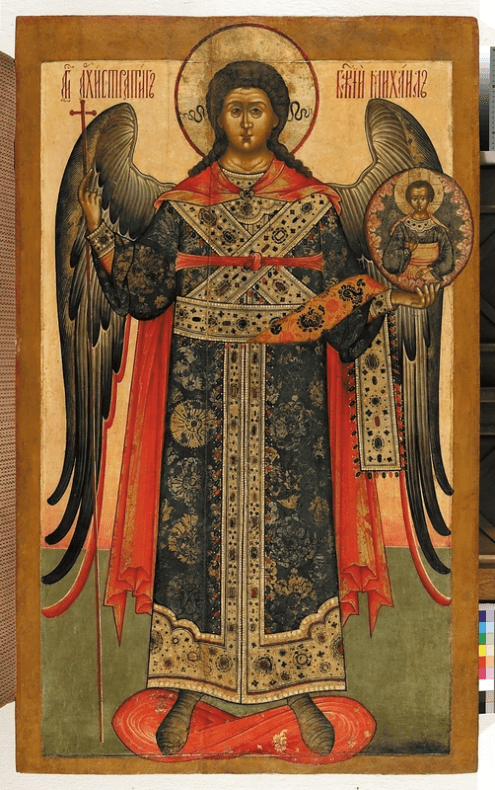
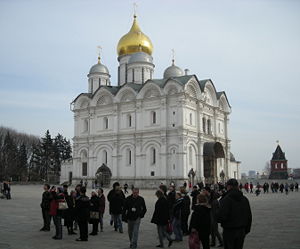
The Cathedral of the Archangel Mikhail, in the Moscow Kremlin, served as the mausoleum of the Muscovite grand princes and tsars until the end of the seventeenth century. The present building (built 1505-1509) was commissioned by Tsar Ivan III (reigned 1462-1505) to replace a fourteenth-century church. The architect was Alvise Lamberti de Montagnano, an Italian sculptor from Venice,known in Russia as Alevizo the New. His design combined a traditional Russian Orthodox fivedomed structure with Renaissance decorative features such as pilasters with Corinthian capitals and scallop-shell motifs, which influenced later Russian architects. The cathedral contains the tombs of most of the Muscovite grand princes and tsars from Ivan I (reigned 1325-1341) to Ivan V (reigned 1682-1696), forty-six in all. In addition, shrines contain the relics of St. Dmitry (son of Ivan IV, died 1591) and St. Mikhail of Chernigov (d. 1246). Ivan IV (r. 1533-1584) is buried behind the iconostasis. The present bronze casings were added to the seventeenth-century sarcophagi in 1906. The frescoes on walls, ceilings, and pillars, mainly dating from the mid-seventeenth century, include iconic images of Russian princes and tsars and relate the military exploits of the warrior Archangel Mikhail,keeper of the gates of heaven. His icon was commissioned to celebrate the Russian victory at Kulikovo Pole in 1380. The cycle celebrates Moscow’s rulers as successors to the kings of Israel, as God’s representatives fighting evil on earth, and as patrons of Russia’s ruling dynasty in heaven. From the 1720s onward, Peter I’s Cathedral of Saints Peter and Paul in St. Petersburg became the new imperial mausoleum. Of the later Romanovs,only Peter II (r. 1727-1730) was buried in the Cathedral of the Archangel. However, the imperial family continued to pay their respects at their ancestors’ tombs after coronations and on other major state occasions.
Archangel Michael, 18th century. Tempera on wooden panel. 150 x 92 cm. Yaroslavl Art Museum, Yaroslavl, Russia.Cathedral of Archangel MIchael in the Kremlin of Moscow image credit: Orthodoxwiki
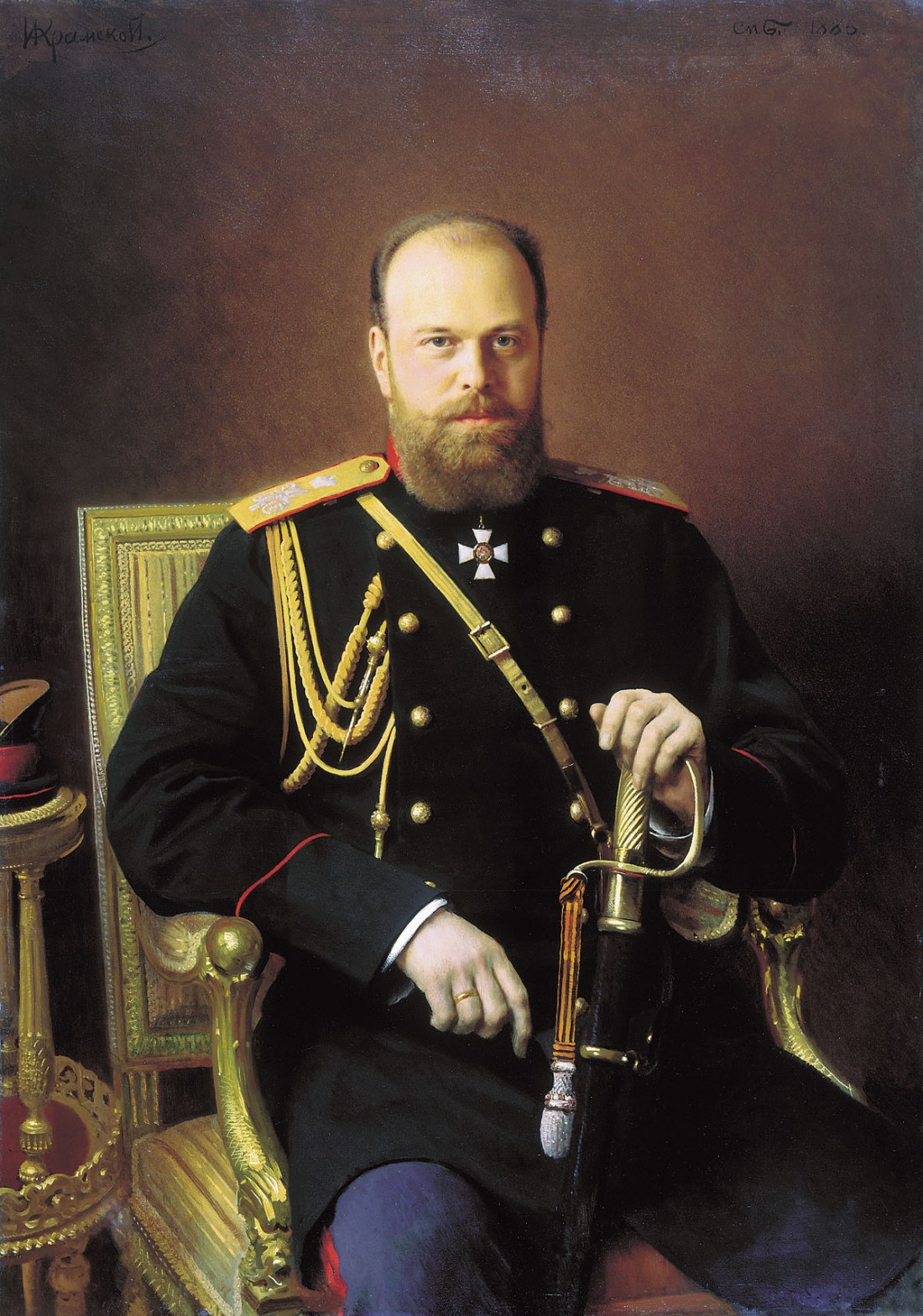
During the reign of Alexander III Russia’s prestige abroad rose to unbelievably new heights and his country thrived in peace and order. During all the years of his rule, Russia was not involved in a single major war. For this he was dubbed “The Peacemaker.” He was considered the most Russian, the most austere and the most serene Tsar. He took the throne when Russia was at its worse, when revolutionary terror raged, and passed it onto his successors perfectly pacified.
Alexander III was the second son of Alexander II and Maria Alexandrovna. Brought up as a Grand Prince, rather than a future Tsar, he was destined for a military career. However, fate decided otherwise. In April 1865 his elder brother Nicholas suddenly died and as of that moment Alexander was proclaimed the heir to the Russian throne.
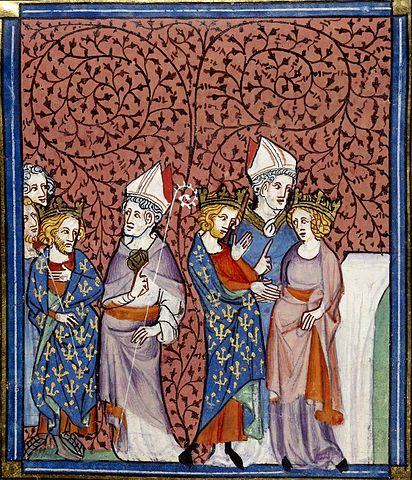
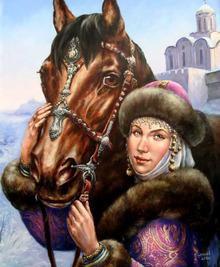
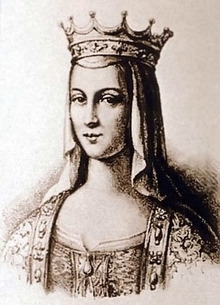
History books remember her as a golden-haired girl from an exotic land who became queen consort and, later, regent of France. Anna was born to Yaroslav the Wise – grand duke of Kiev and the initiator of the “golden age” of Rus – and his wife Ingegerd. Her parents insisted on giving her a good education and, by the age of 18, under the supervision of her mother, she had mastered Latin, Ancient Greek and the basics of medicine.
In 1048, the French embassage, led by the Bishop of the city of Meaux Gautier and minister of the French Court Goscelin de Chalignac, arrived in Kiev with a mission to arrange a marriage between the king of France, Henry I, and Anna. Rumors of Anna’s exquisite beauty, literacy and wisdom reached many corners of Europe.
Historians still debate the reasoning behind Henry’s choice of a second wife: France did not have any diplomatic or trade links with Rus at the time. However, the general consensus is that Henry couldn’t find a suitable princess-bride in Europe – all the eligible young women were related to him within illegal degrees of kinship.
Apart from the king’s best regards, the entourage brought exquisite swords, broadcloths and silver dishes to demonstrate their serious yet friendly intentions to woo. Being a prolific father as well as a wise ruler, Yaroslav sought to consolidate his leadership of Kiev and to give a comfortable future to his children. Profitable marriages would kill two birds with one stone. And Anna’s marriage to Henry I was the most successful one of them all.
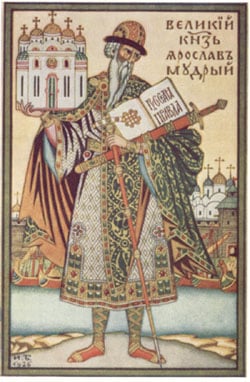
Ivan Bilibin’s artwork of Yaroslav I.
The king was more than 40 at the time of the couple’s first meeting; he suffered from obesity and became spiteful, even with his concubines. However when he saw Anna, he softened and even smiled, leaning in to kiss her. After this passionate introduction, Anna is quoted to have pulled back, blushed and said: “I suppose it is you who is king…”
Queen of France
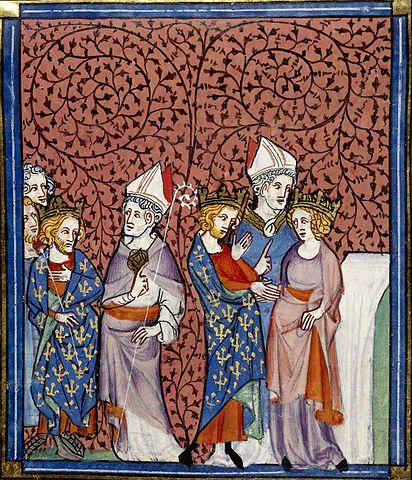
Their wedding – as well as Anna’s coronation as Queen of France – took place in May 1049, Holy Trinity Day, in the Cathedral of the city of Reims, long-established as the site of the coronation of French kings. On the marriage contract, Anna gracefully signed her name and patronymic whilst the king of France simply put down a cross.
At her coronation, the newly-wed queen broke with tradition: instead of conforming to tradition and taking her royal vows with her hand placed on a Latin Bible, she used a Slavic Gospel, which she brought from Kiev with her.
Her letters of the period show that she wasn’t fond of her new homeland, thinking it was too provincial in comparison to Kiev. In 1050 she writes to her:
father: “What a barbarous country you sent me to – the dwellings are somber, the churches horrendous and the morals – terrible”.
There is little information regarding how Anna was received at the French court. She was, however, quick to learn the French language and keenly participated in government affairs, despite having a merely decorative post. Her name can be found on official documents, next to the king’s ever-present X. The signatures read “by the approval of my spouse Anna” or “in the presence of Queen Anna”.
However, the young queen couldn’t produce an heir for a long time, which probably created tension and sparked unwanted rumors. She is said to have spent long hours in prayer, pledging to found a monastery if she would successfully give birth to a prince. Finally, either thanks to her active spirituality, or more likely to the untiring efforts of her 45-year-old husband in 1053, she gave birth to her first-born son, christened Philip. Henry and Anna had two more children: Robert who died in adolescence as a highwayman, and Hugh (Hugues), who joined the first Crusades.
In 1060 Henry died, leaving the French throne to Philip, who was only seven years old at the time. Anna became the regent ruling the country in the name of her son. True to her word, she founded a monastery dedicated to St Vincent in Senlis, not far from Paris. Only a chapel has survived. A monument to Anne of Rus still stands next to the chapel. Like his father before him, Philip took Anna’s advice seriously, and her signature can be found on official documents next to his.
Born in the early 1920’s, when the bourgeoisie in a number of countries began to resort to fascism to preserve their domination, which was threatened by the revolutionary upsurge that began after World War I and the Great October Socialist Revolution.
The leading force in the antifascist movement, which embraced broad masses of toilers, was the working class, which took an active part in the antifascist struggle in a number of countries from the first appearance of fascism in the political arena. The working class of the Soviet Union, which was the only section of the international proletariat in power until the end of World War II, constantly gave active assistance to the antifascists of capitalist countries. Analysis of the class roots of fascism and of the trends and methods in its activities was important for the antifascist movement, and this analysis was reflected in summary reports of the Central Committee and resolutions of the congresses of the CPSU. The successes of the Soviet socialist state in economic and cultural construction and the world historical victories of the USSR in the struggle against fascism on the fronts of the Great Patriotic War, 1941–45, inspired participants in the antifascist movement throughout the world. From the moment of inception of the international antifascist movement, the Soviet Union was its recognized stronghold.
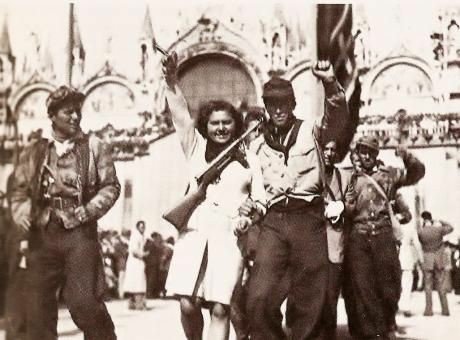
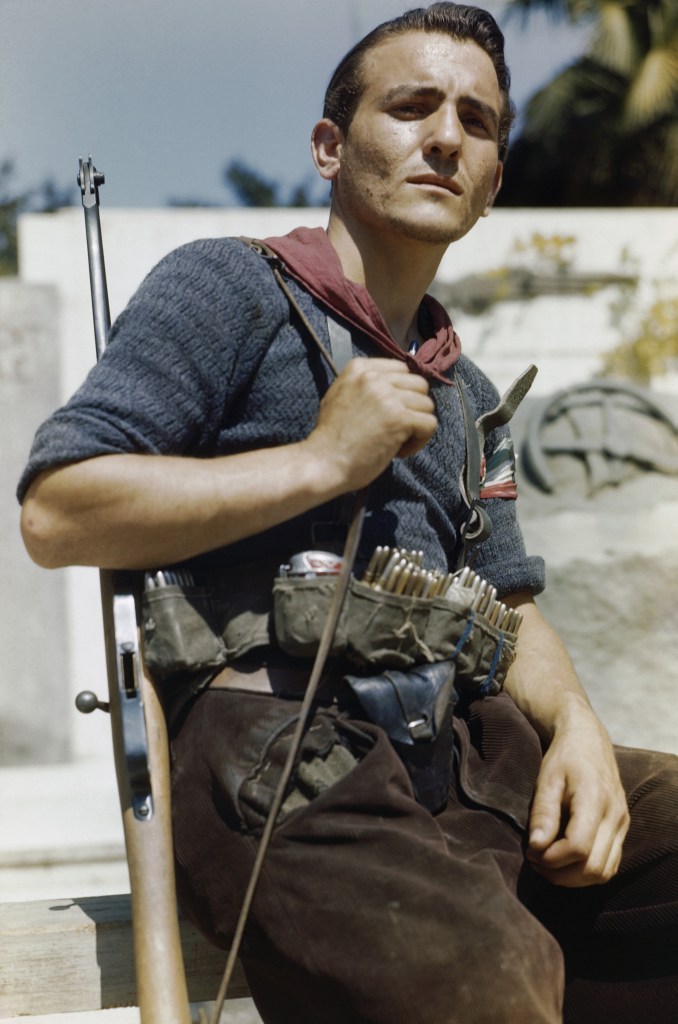
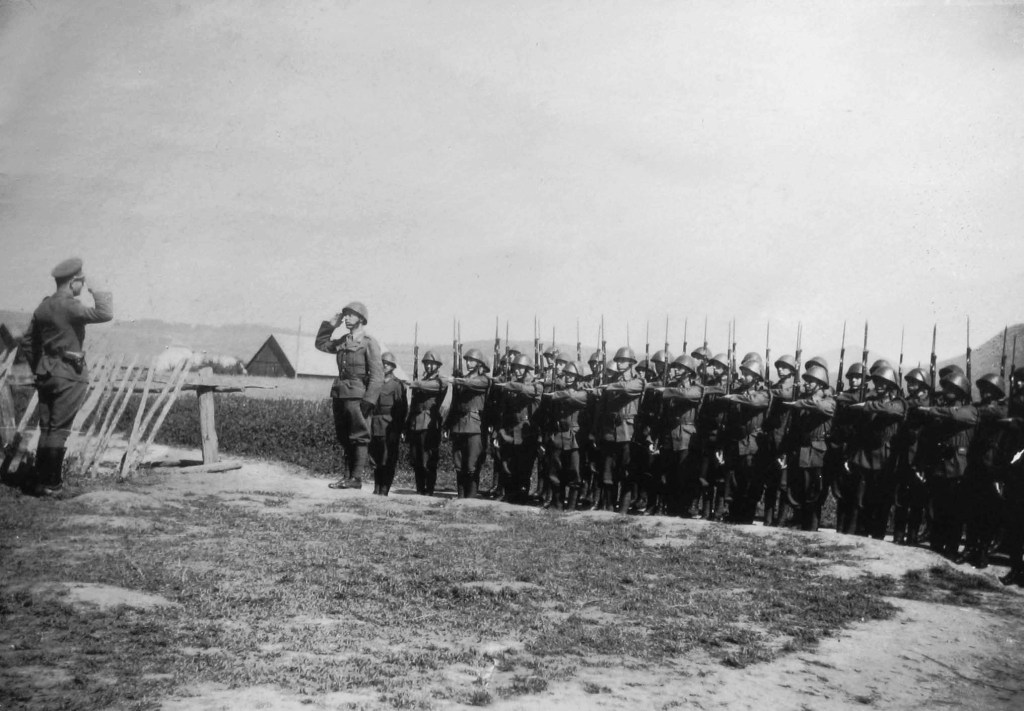
An Italian partisan in Florence, 14 August 1944. Senor Prigile, an Italian partisan in Florence. British troops were ordered to avoid fighting the Germans in the precincts of the city of Florence. Italian Partisans, occupying the Fortress Di Basso exchanged fire with the German snipers that remained after the German forces evacuated Florence. 18th Anti Aircraft Artillery Batery, that took part in Slovak National Uprising in autumn 1944
In response to the fascist offensive, the antifascist movement unfolded in Italy in 1921. Beginning with antifascist strikes and demonstrations, the Italian workers later moved to armed resistance against the Blackshirts. The high point of the antifascist movement in Italy in this period was the bloody battles that accompanied the general national strike declared in August 1922. The movement did not cease with the establishment of the Fascist regime in Italy (October 1922); it became ever more active in time. As early as 1924 the Italian Communist Party, which stood in the forefront of the antifascist movement, called for the unification of all enemies of fascism.
The antifascist movement also developed in a number of other countries where terrorist dictatorial regimes were established (Hungary and Bulgaria). The September Antifascist Uprising of 1923 in Bulgaria enriched the experience of the antifascist movement in other countries. The antifascist movement arose in Germany in 1920. It was directed against the National Socialist Party and other extreme right-wing terrorist groups. Somewhat later (from 1926) a movement unfolded in Poland against Pilsudski’s “cleaning” regime.
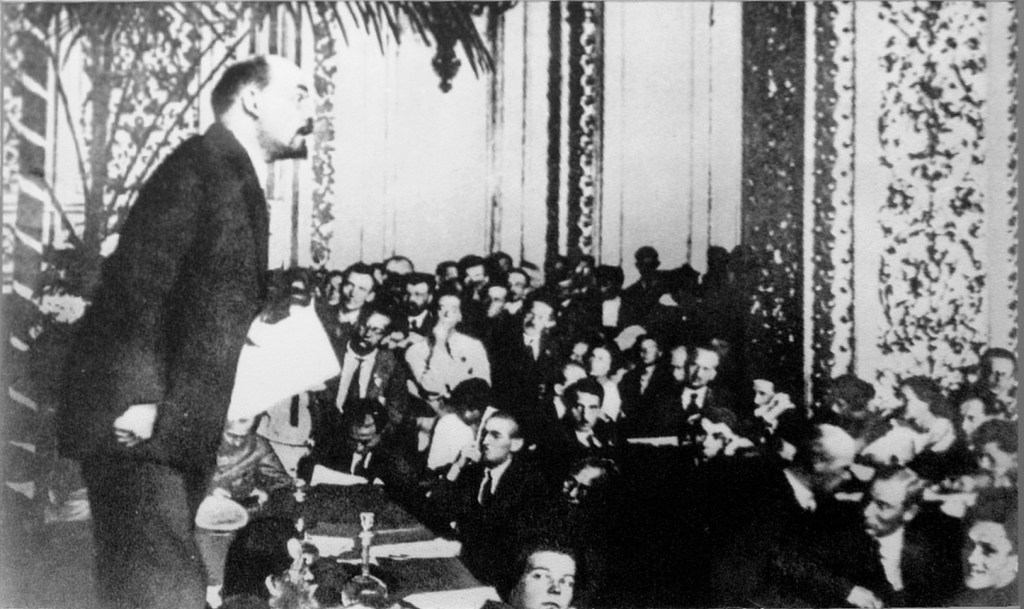
The onslaught of fascism in a number of countries confronted democratic forces with the task of developing more effective forms and methods in the antifascist movement. The tactic of a united labor front, first worked out by the Third Comintern Congress (1921) under the guidance of V. I. Lenin, played an important role in the expansion of the antifascist movement. The Fourth Comintern Congress (1922) recognized the organization of resistance to world fascism as one of the most important tasks of communist parties; it pointed to the tactic of a united labor front as the main means of struggle against fascism. A conference of revolutionary workers was held in Frankfurt-am-Main in March 1923. It elected the International Committee for Action Against the Military Threat and Fascism, headed by K. Zetkin, F. Heck-ert, and H. Barbusse. The Third Enlarged Plenum of the Executive Committee of the Communist International (IKKI) in June 1923 devoted much attention to the antifascist movement; K. Zetkin delivered a report on the “Fight Against Fascism.” The threat posed by fascism and the means to struggle against it were discussed at the fifth (1924) and sixth (1928) congresses of the Comintern and at the plenums of IKKI.
В. И. Ленин выступает на III конгрессе Коммунистического интернационала
Viewing the struggle against fascism as the concern of the entire proletariat, the Comintern called upon the communist parties to conduct a policy that would permit the isolation of fascism and the consolidation of the broadest strata of the population against it. However, the activities of a number of communist parties strongly demonstrated a sectarianism that hindered this consolidation and a lack of precision in evaluating the essence of fascism; a denial of the serious distinction between fascism and bourgeois-democratic regimes also took place. In the late 1920’s the term “social fascism” came into currency in some documents of the Comintern and the communist parties; it was accepted as a designation for social democracy, a fact that contradicted the definition of fascism as the weapon of the most reactionary forces of the bourgeoisie and which made it more difficult to unite all the democratic forces of the antifascist movement. This mistaken term became widespread during the period of the world economic crisis of 1929–33, at which time the revolutionary movement, entering a new upsurge, again shook the foundations of bourgeois rule in a number of countries, including Germany. In Germany the interests of big capital in establishing a dictatorial regime reinforced the striving toward the preparation of a revanchist war; meanwhile, the fascists’ opportunity to gain mass influence was particularly favorable, thanks to the extensive use of nationalistic dem-agoguery.
The antifascist movement in Germany was a bright page in the history of the German workers’ movement. At the forefront of the movement was the Communist Party of Germany, which made enormous efforts to create a united labor front. The antifascist movement attained maximum scope during those years with the start of a campaign of “Antifascist Action” (1932), during which workers of differing political convictions began to create committees of the united front and self-defense groups in local areas. By the end of 1932 the fascist movement in Germany had fallen into decline under the blows of the working class and all antifascist forces. However, the split in the working class—primarily the result of the reluctance of the leadership of social democracy to cooperate with the communists—impeded the creation of a broad, firm united labor and popular front. The German monopolists exploited this situation to deliver power to Hitler in January 1933.
In its appeal to the workers of all countries on Mar. 5, 1933, IKKI proposed a concrete program for antifascist struggle on the basis of cooperation between the two Internationals, the communist and the socialist. However, the latter, while agreeing in words to negotiations, sabotaged common action. Nonetheless, the communists continued to seek paths toward the creation of a united antifascist front. To this end, the European Antifascist Workers’ Congress was convened in Paris in 1933. The congress, which was held in Pleyel Hall, initiated the Pleyel movement, which played a definite role in the development of the antifascist movement. The speeches of G. M. Dimitrov at the Leipzig Trial of 1933 and the international campaign in his defense were important for the mobilization of laboring people in the struggle against fascism.
The antifascist movement included the best representatives of the intelligentsia. The antifascist activities of Soviet cultural figures, in particular M. Gorky, played a large role in the development of the movement. The writers H. Barbusse, R. Rolland, T. Mann, H. Mann, M. Andersen-Nexö, and H. Wells, the artist P. Picasso, and others demonstrated their opposition to fascism. In 1935 the International Congress of Writers in Defense of Culture was held in Paris.
The fascists encountered organized, effective resistance in a number of countries. The fascist putsch attempted in France in February 1934 failed because of the decisive actions of the antifascists. In the course of the struggle, antifascist unity was forged among the French working class and subsequently among other strata of the population whose interests did not lie in the establishment of a fascist regime. In 1935 the Popular Front was created in France. It included both communist and socialist parties, as well as leftist bourgeois political organizations. February 1934 was marked by a violent upsurge of the antifascist movement in Austria, where a particular form of clerical fascism was gaining strength. The armed struggle of Austrian workers against the fascists, even though it ended in defeat, was inscribed for all times in the chronicle of the antifascist movement.
The working people of the Soviet Union ardently came to the defense of the victims of fascism and the heroes of the antifascist movement (meetings of solidarity with the antifascists of Austria and Spain were held everywhere in 1934). They collected money to aid the victims of fascism—in 1934, for example, about 1 million shillings was given to the fund to aid Austrian workers. The USSR offered asylum to antifascists: Soviet citizenship was granted to G. M. Dimitrov, who was imprisoned in fascist jails after the Leipzig trial; about 600 Austrian Schutzbundists who had participated in the February battles against the fascists in 1934 emigrated to the Soviet Union. In 1932 about 10 million people belonged to the Soviet section of the International Organization for Aid to the Fighters of the Revolution; one of its most important tasks was to provide aid to victims of fascism.
SOURCES Kommunisticheskii Internatsional v dokumentakh 1919–1932. Moscow, 1933. Rezoliutsii VII Vsemirnogo kongressa Kommunisticheskogo Inter-natsionala. Moscow, 1935. VII Congress der Kommunistischen Internationale. Moscow, 1935. VII Congress of the Communist International: Abridged Stenographic Report of Proceedings. Moscow, 1939. Mezhdunarodnaia proletarskaia solidarnost’ v bor’be s nastu-pleniem fashizma (1928–1932). Moscow, 1960. Mezhdunarodnaia solidarnost’ trudiashchikhsia v bor’be s fashi-zmom, protiv razviazyvaniia vtoroi mirovoi voiny (1933–1937). Moscow, 1961. Mezhdunarodnaia solidarnost’ trudiashchikhsia v bor’be za mir i natsional’noe osvobozhdenie protiv fashistskoi agressii, za pol-noe unichtozhenie fashizma v Evrope i Azii(1938–1945). Moscow, 1962.
Excerpt from Historical Dictionary of the Russian federation
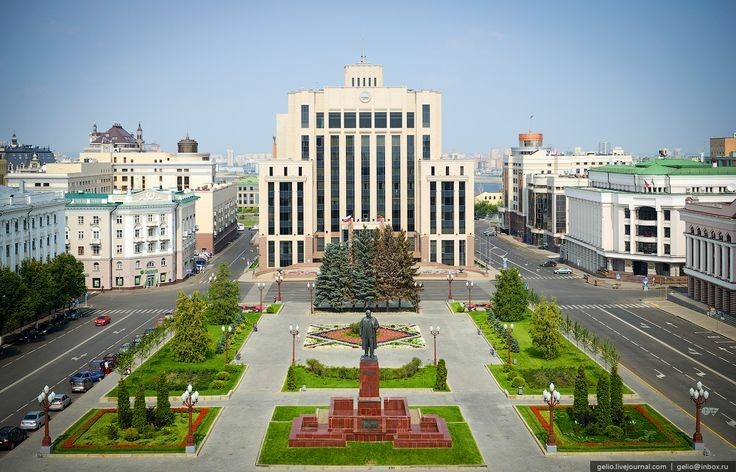
An ethnic republic of the Russian Federation. With the exception of Chechnya, which gained its current status through two wars, Tatarstan is recognized as the most sovereign of all of Russia’s federal subjects and the paragon of Boris Yeltsin’s asymmetrical federalism. In nearly every way, the region functions as a country within a country. Relations between Muslim Tatars and Orthodox Russians date back centuries, and though interactions have often been plagued by mutual suspicion, cooperation and cultural exchange have also been evident. Tatarstan, then known as the Khanate of Kazan, was incorporated into Russia during the reign of the first tsar of Russia, Ivan the Terrible (15471584). The inclusion of a large non-Christian, Turkic nation into Russia secured the multicultural nature of the Romanov Empire for centuries. During the late 19th century, Tatarstan became an important center of education in the Muslim world due to the spread of the progressive Islamist ideology of Jadidism. Tatars, in turn, became agents of both Islamicization and Russification across Russian Central Asia. During the Russian Civil War, Tatar nationalists created a short-lived federation of Turkic and FinnoUralic peoples known as the Idel-Ural State. Once the Bolsheviks consolidated power in the Volga region, Tatarstan was organized into an Autonomous Soviet Socialist Republic (ASSR) on 27 May 1920, epitomizing the Leninist slogan of “nationalist in form but socialist in content.” The republic failed to include the majority of ethnic Tatars and purposefully created political divisions between the Tatars and their fellow Turkic Muslims in neighboring Bashkortostan. However, Tatarstan was unofficially bestowed with the position of primus inter pares among Russia’s ASSRs. Modern Tatarstan is part of the Volga Federal District and Economic Region. The republic covers an area of 68,000 square kilometers, and its mostly flat topography is defined by a mixture of forests and plains. The Volga River roughly divides the country along a north-south axis. The republic has a population of 3.7 million, thus ranking it eighth among federal subjects. Tatars represent a majority at 53 percent, while ethnic Russians are the largest minority (40 percent); Chuvash are the region’s other statistically significant national minority. Only one-quarter of all Tatars reside in the republic. Kazan (pop. 1.1 million) is the capital of the republic. The city served as capital of the Khanate of Kazan and the Idel-Ural State. During World War II, a sizable portion of the Soviet militaryindustrial complex was relocated to the city. Today, it is an important scientific, cultural, and educational center in the Volga region. Vladimir Lenin studied briefly at Kazan State University, as did Leo Tolstoy. In 2005, a single-line metro was opened in the city, as was Russia’s largest mosque, Qolşärif. Other important cities in the region are Nabrezhnye Chelny, Zelenodolsk, and Nizhnekamsk. The Tatarstan economy is well developed and diversified between agriculture, industry, and the export of hydrocarbons. Tatarstan accounts for more than half of Russia’s heavy oil production and nearly 10 percent of all oil extraction; there are more than 400 oil fields in the region, with reserves of more than 2 billion tons. Despite its oil wealth, the republic must import natural gas for heating and industrial purposes.
Under the leadership of Mintimer Shaymiyev, Tatarstan emerged as an early and vocal supporter of asymmetrical federalism during the Yeltsin era. As head of the Tatar ASSR’s Supreme Soviet, Shaymiyev declared Tatarstan to be a sovereign republic on 31 August 1990. The republic was the scene of unbridled nationalism during the first year of post-Soviet independence, prompting fear amongst the sizable Slavic population. Along with Chechnya, Tatarstan rejected the new Federation Treaty in 1992, opting instead for its own constitution, which was promulgated on 6 November 1992. While federal troops amassed on the border, no invasion of the republic occurred, as the local leadership, unlike in Chechnya, stopped short of declaring outright independence. In February 1994, the republic led the way in establishing bilateral relations with Moscow, which included full ownership of natural resources and much of its industrial base, as well as retention of 50 percent of all value-added tax (VAT), twice as much as its peers. Tatarstan also gained the right to conclude economic, cultural, and scientific-technical relations with foreign powers (to date, such agreements have been signed with Cuba, Poland, Germany, India, Turkey, the United States, most countries of the Commonwealth of Independent States, and others). Shaymiyev’s concessions to the Russians–though unpopular with Tatar nationalists–preserved peace within the region and allowed for better relations with the rest of the Russian Federation. During the 1990s, Tatarstan exerted sovereignty over nearly every aspect of its governance except foreign relations and external security (Tatar conscripts were even exempted from fighting in conflict zones). Controversially, the republic also introduced the institution of Tatar citizenship, separate from Russian citizenship.
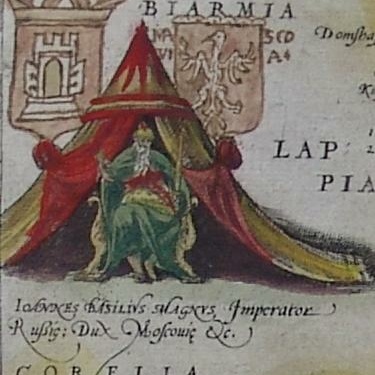
This list could have been all tsars. These rulers were raised under conditions guaranteed to make anyone a sociopath. Most of them saw close relatives murdered by other close relatives. Though abused relentlessly as children, as adults they had both absolute power and a sword of Damocles over their heads. Ivan’s father died when Ivan was only three, and his mother was poisoned when he was eight. During his minority an unruly gang of noblemen governed the land, and starved, beat, and neglected the boy and his brother. He took the abuse out on small animals, which he would throw off the roofs of palaces. Hurling things about proved good practice for the tsar-in-training. At 16, Ivan marched into the throne room, grabbed the leader of the noblemen, and threw the man to Ivan’s trained hunting dogs.
Ivan’s reign was marked by violent paranoia. When Ivan suspected a nobleman wanted the throne, he dressed the man up as a king, put him on the throne, and gutted him. Ivan created a special police force, the members of which rode around with dogs’ heads hanging from their saddles and could murder anyone at any time, in public. Once, when Ivan heard a rumor that a town called Novgorod was rebellious, he killed every single person in the town, sewed the town’s archbishop up into a bearskin, and had his dogs hunt the bearman down.
It’s hard to write all that and then use the phrase, “conditions deteriorated,” but, somehow, conditions deteriorated. Ivan started having fits. In paintings he’s depicted as having a prominent nose and forehead. These are the way kind (and probably fearful) artists rendered calluses that Ivan had built up by banging his head on the stone floor in front of religions icons. Ivan would also have fits of rage. During one fit, he kicked his pregnant daughter-in-law in the stomach and caused her to miscarry. His son, an able and promising ruler, yelled at him. Ivan beat his son to death with his scepter, then went into paroxysms of remorse. It was that moment that changed history. Ivan was a member of the ancient Rurik line of nobility. With the only strong heir to the throne swept out of the way, Russia descended into chaos after Ivan’s death. At last, nobles cast around for any noble family that the nation could rally around. They came up with an heir called Michael Romanov.

 Mother Rus