
Born in the early 1920’s, when the bourgeoisie in a number of countries began to resort to fascism to preserve their domination, which was threatened by the revolutionary upsurge that began after World War I and the Great October Socialist Revolution.
The leading force in the antifascist movement, which embraced broad masses of toilers, was the working class, which took an active part in the antifascist struggle in a number of countries from the first appearance of fascism in the political arena. The working class of the Soviet Union, which was the only section of the international proletariat in power until the end of World War II, constantly gave active assistance to the antifascists of capitalist countries. Analysis of the class roots of fascism and of the trends and methods in its activities was important for the antifascist movement, and this analysis was reflected in summary reports of the Central Committee and resolutions of the congresses of the CPSU. The successes of the Soviet socialist state in economic and cultural construction and the world historical victories of the USSR in the struggle against fascism on the fronts of the Great Patriotic War, 1941–45, inspired participants in the antifascist movement throughout the world. From the moment of inception of the international antifascist movement, the Soviet Union was its recognized stronghold.
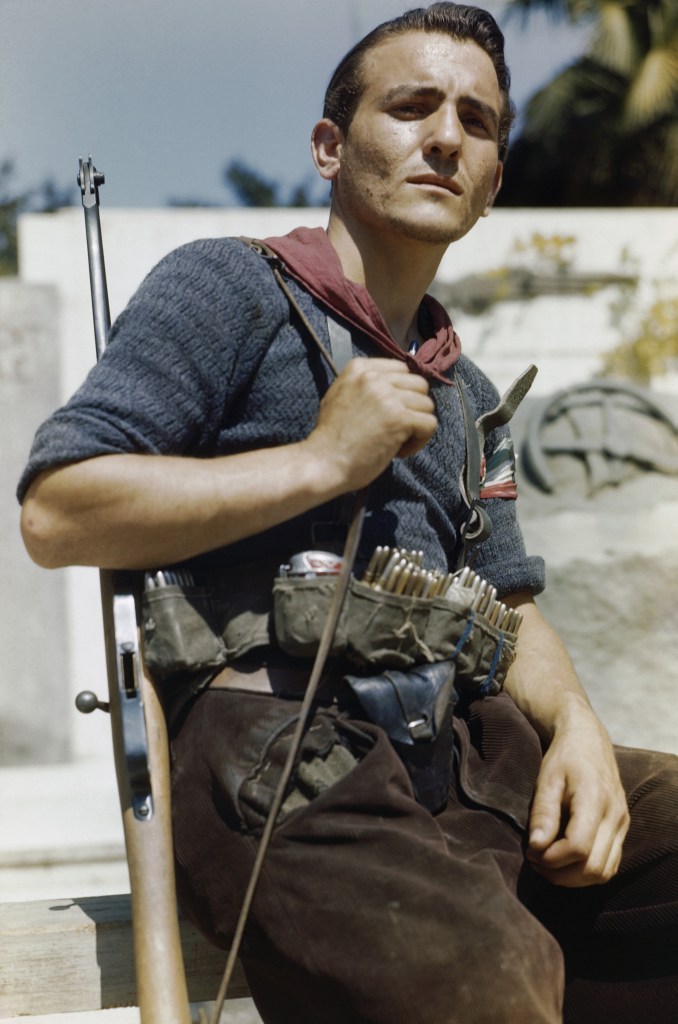
Senor Prigile, an Italian partisan in Florence. British troops were ordered to avoid fighting the Germans in the precincts of the city of Florence. Italian Partisans, occupying the Fortress Di Basso exchanged fire with the German snipers that remained after the German forces evacuated Florence.
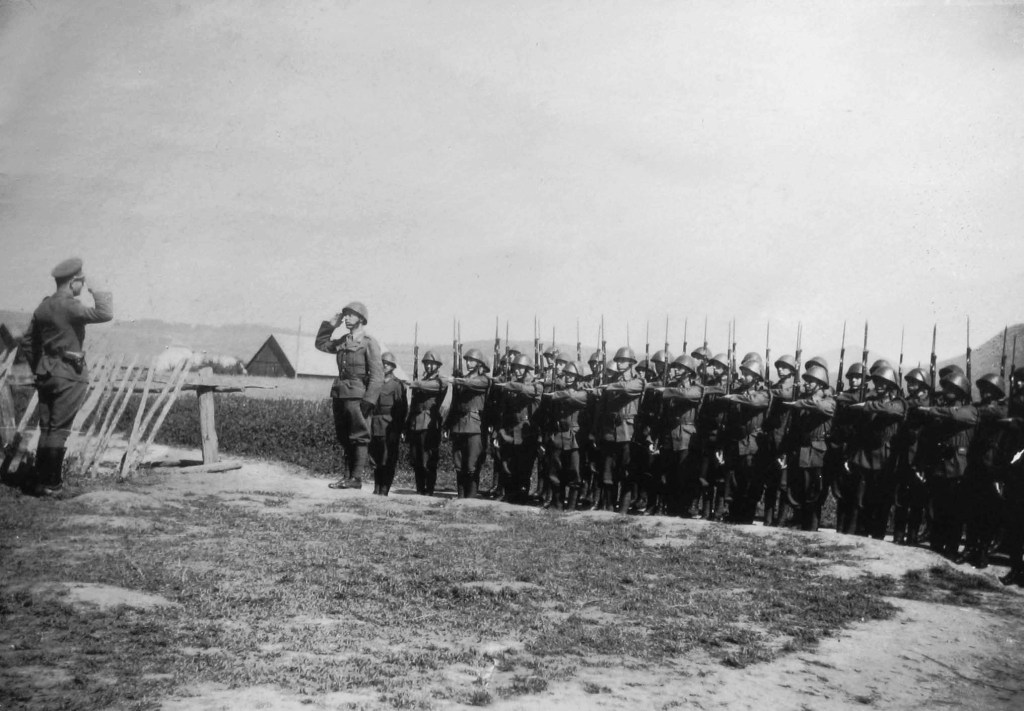
In response to the fascist offensive, the antifascist movement unfolded in Italy in 1921. Beginning with antifascist strikes and demonstrations, the Italian workers later moved to armed resistance against the Blackshirts. The high point of the antifascist movement in Italy in this period was the bloody battles that accompanied the general national strike declared in August 1922. The movement did not cease with the establishment of the Fascist regime in Italy (October 1922); it became ever more active in time. As early as 1924 the Italian Communist Party, which stood in the forefront of the antifascist movement, called for the unification of all enemies of fascism.
The antifascist movement also developed in a number of other countries where terrorist dictatorial regimes were established (Hungary and Bulgaria). The September Antifascist Uprising of 1923 in Bulgaria enriched the experience of the antifascist movement in other countries. The antifascist movement arose in Germany in 1920. It was directed against the National Socialist Party and other extreme right-wing terrorist groups. Somewhat later (from 1926) a movement unfolded in Poland against Pilsudski’s “cleaning” regime.
The onslaught of fascism in a number of countries confronted democratic forces with the task of developing more effective forms and methods in the antifascist movement. The tactic of a united labor front, first worked out by the Third Comintern Congress (1921) under the guidance of V. I. Lenin, played an important role in the expansion of the antifascist movement. The Fourth Comintern Congress (1922) recognized the organization of resistance to world fascism as one of the most important tasks of communist parties; it pointed to the tactic of a united labor front as the main means of struggle against fascism. A conference of revolutionary workers was held in Frankfurt-am-Main in March 1923. It elected the International Committee for Action Against the Military Threat and Fascism, headed by K. Zetkin, F. Heck-ert, and H. Barbusse. The Third Enlarged Plenum of the Executive Committee of the Communist International (IKKI) in June 1923 devoted much attention to the antifascist movement; K. Zetkin delivered a report on the “Fight Against Fascism.” The threat posed by fascism and the means to struggle against it were discussed at the fifth (1924) and sixth (1928) congresses of the Comintern and at the plenums of IKKI.
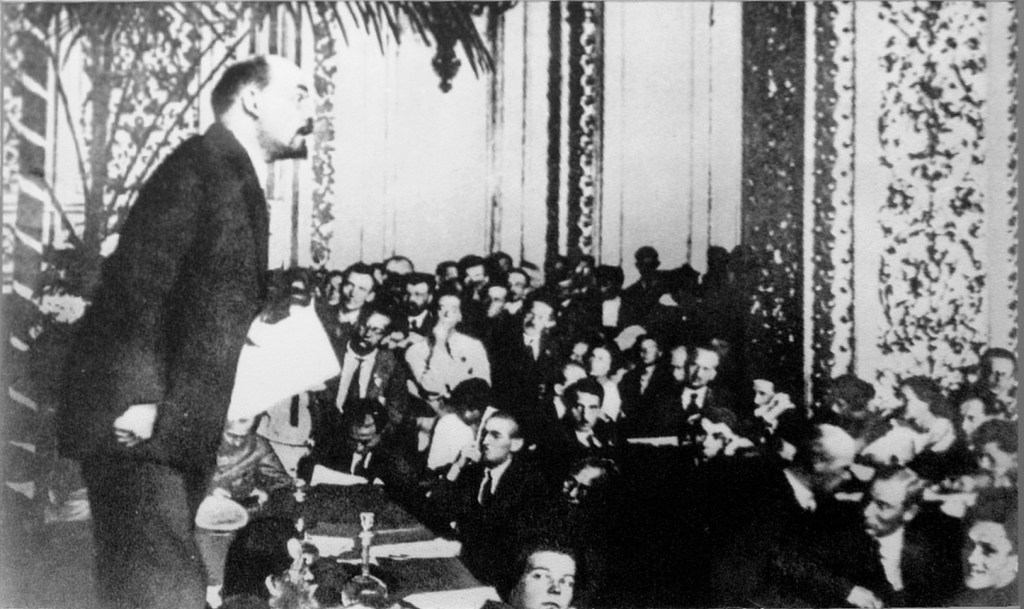
Viewing the struggle against fascism as the concern of the entire proletariat, the Comintern called upon the communist parties to conduct a policy that would permit the isolation of fascism and the consolidation of the broadest strata of the population against it. However, the activities of a number of communist parties strongly demonstrated a sectarianism that hindered this consolidation and a lack of precision in evaluating the essence of fascism; a denial of the serious distinction between fascism and bourgeois-democratic regimes also took place. In the late 1920’s the term “social fascism” came into currency in some documents of the Comintern and the communist parties; it was accepted as a designation for social democracy, a fact that contradicted the definition of fascism as the weapon of the most reactionary forces of the bourgeoisie and which made it more difficult to unite all the democratic forces of the antifascist movement. This mistaken term became widespread during the period of the world economic crisis of 1929–33, at which time the revolutionary movement, entering a new upsurge, again shook the foundations of bourgeois rule in a number of countries, including Germany. In Germany the interests of big capital in establishing a dictatorial regime reinforced the striving toward the preparation of a revanchist war; meanwhile, the fascists’ opportunity to gain mass influence was particularly favorable, thanks to the extensive use of nationalistic dem-agoguery.
The antifascist movement in Germany was a bright page in the history of the German workers’ movement. At the forefront of the movement was the Communist Party of Germany, which made enormous efforts to create a united labor front. The antifascist movement attained maximum scope during those years with the start of a campaign of “Antifascist Action” (1932), during which workers of differing political convictions began to create committees of the united front and self-defense groups in local areas. By the end of 1932 the fascist movement in Germany had fallen into decline under the blows of the working class and all antifascist forces. However, the split in the working class—primarily the result of the reluctance of the leadership of social democracy to cooperate with the communists—impeded the creation of a broad, firm united labor and popular front. The German monopolists exploited this situation to deliver power to Hitler in January 1933.
In its appeal to the workers of all countries on Mar. 5, 1933, IKKI proposed a concrete program for antifascist struggle on the basis of cooperation between the two Internationals, the communist and the socialist. However, the latter, while agreeing in words to negotiations, sabotaged common action. Nonetheless, the communists continued to seek paths toward the creation of a united antifascist front. To this end, the European Antifascist Workers’ Congress was convened in Paris in 1933. The congress, which was held in Pleyel Hall, initiated the Pleyel movement, which played a definite role in the development of the antifascist movement. The speeches of G. M. Dimitrov at the Leipzig Trial of 1933 and the international campaign in his defense were important for the mobilization of laboring people in the struggle against fascism.
The antifascist movement included the best representatives of the intelligentsia. The antifascist activities of Soviet cultural figures, in particular M. Gorky, played a large role in the development of the movement. The writers H. Barbusse, R. Rolland, T. Mann, H. Mann, M. Andersen-Nexö, and H. Wells, the artist P. Picasso, and others demonstrated their opposition to fascism. In 1935 the International Congress of Writers in Defense of Culture was held in Paris.
The fascists encountered organized, effective resistance in a number of countries. The fascist putsch attempted in France in February 1934 failed because of the decisive actions of the antifascists. In the course of the struggle, antifascist unity was forged among the French working class and subsequently among other strata of the population whose interests did not lie in the establishment of a fascist regime. In 1935 the Popular Front was created in France. It included both communist and socialist parties, as well as leftist bourgeois political organizations. February 1934 was marked by a violent upsurge of the antifascist movement in Austria, where a particular form of clerical fascism was gaining strength. The armed struggle of Austrian workers against the fascists, even though it ended in defeat, was inscribed for all times in the chronicle of the antifascist movement.
The working people of the Soviet Union ardently came to the defense of the victims of fascism and the heroes of the antifascist movement (meetings of solidarity with the antifascists of Austria and Spain were held everywhere in 1934). They collected money to aid the victims of fascism—in 1934, for example, about 1 million shillings was given to the fund to aid Austrian workers. The USSR offered asylum to antifascists: Soviet citizenship was granted to G. M. Dimitrov, who was imprisoned in fascist jails after the Leipzig trial; about 600 Austrian Schutzbundists who had participated in the February battles against the fascists in 1934 emigrated to the Soviet Union. In 1932 about 10 million people belonged to the Soviet section of the International Organization for Aid to the Fighters of the Revolution; one of its most important tasks was to provide aid to victims of fascism.
SOURCES
Kommunisticheskii Internatsional v dokumentakh 1919–1932. Moscow, 1933.
Rezoliutsii VII Vsemirnogo kongressa Kommunisticheskogo Inter-natsionala. Moscow, 1935.
VII Congress der Kommunistischen Internationale. Moscow, 1935.
VII Congress of the Communist International: Abridged Stenographic Report of Proceedings. Moscow, 1939.
Mezhdunarodnaia proletarskaia solidarnost’ v bor’be s nastu-pleniem fashizma (1928–1932). Moscow, 1960.
Mezhdunarodnaia solidarnost’ trudiashchikhsia v bor’be s fashi-zmom, protiv razviazyvaniia vtoroi mirovoi voiny (1933–1937). Moscow, 1961.
Mezhdunarodnaia solidarnost’ trudiashchikhsia v bor’be za mir i natsional’noe osvobozhdenie protiv fashistskoi agressii, za pol-noe unichtozhenie fashizma v Evrope i Azii(1938–1945). Moscow, 1962.
 Mother Rus